
On-page SEO is where search optimization truly begins. Before backlinks, before authority, and even before advanced technical fixes, on-page SEO determines whether a page can be understood clearly by search engines and users.
Many websites struggle not because they lack content, but because their pages fail to communicate relevance. On-page SEO solves that problem by aligning page structure, content, and signals in a way search engines can interpret easily.
If you want consistent SEO results, mastering on-page SEO is essential.
What Is On-Page SEO?
On-page SEO refers to all optimization practices applied directly on a webpage to improve its visibility in search results.
These optimizations help search engines:
- understand what the page is about
- evaluate its relevance for queries
- determine how useful it is for users
Unlike off-page SEO, on-page SEO is fully within your control.
Why On-Page SEO Matters
Search engines don’t “see” a webpage like humans do. They rely on signals to understand content structure and meaning.
On-page SEO:
- improves crawling and indexing
- clarifies topical relevance
- supports better rankings
- enhances user experience
A page without proper on-page SEO often underperforms, even with good backlinks.
Core Elements of On-Page SEO
On-page SEO is built around several foundational elements. Each plays a specific role.
Title Tags and Meta Descriptions
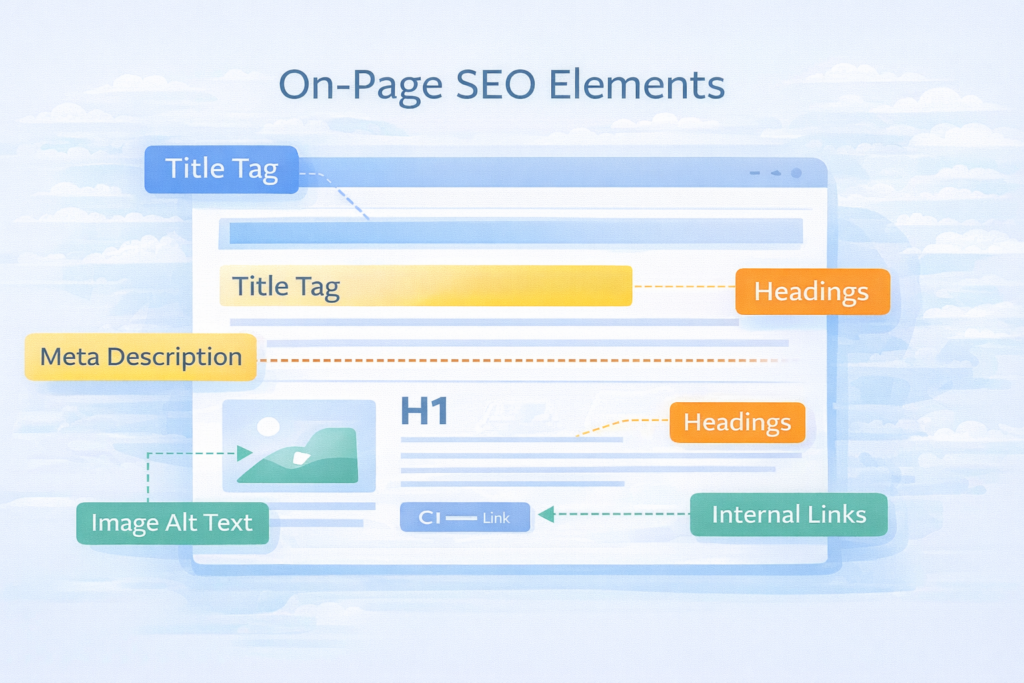
The title tag tells search engines what the page is about. It is also the primary headline users see in search results.
Meta descriptions don’t directly affect rankings, but they influence click-through rate.
Best practices include:
- clear topic focus
- natural keyword usage
- readable, user-focused wording
Headings and Content Structure
Headings help organize content logically.
They allow:
- users to scan easily
- search engines to understand hierarchy
A clear heading structure improves readability and relevance signals.
Content Quality and Relevance
Content must satisfy search intent.
High-quality content:
- answers user questions clearly
- avoids unnecessary fluff
- covers the topic thoroughly
- uses natural language
Search engines reward clarity over keyword repetition.
Keyword Placement (Without Over-Optimization)
Keywords help search engines connect queries to content. But placement matters more than frequency.
Natural keyword placement includes:
- title tag
- main heading
- opening paragraph
- subheadings where relevant
Overuse harms readability and trust.
Internal Linking as an On-Page Signal
Internal links connect pages and provide context.
They help:
- distribute authority
- guide crawlers
- reinforce topical relationships
Strong internal linking supports overall on-page SEO performance.
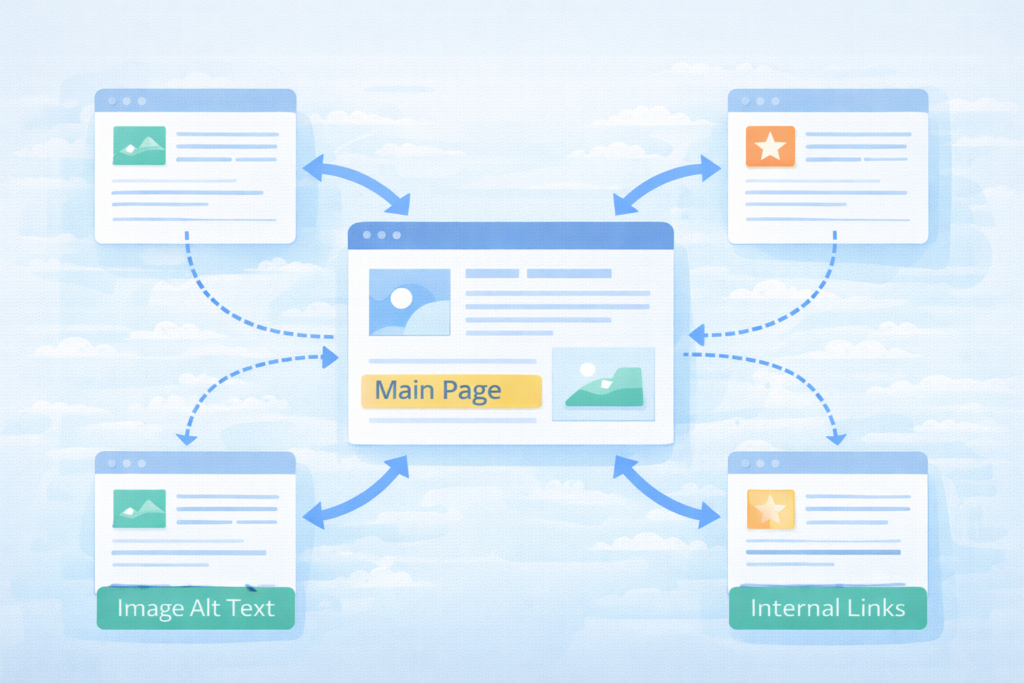
Image Optimization and Alt Text
Images improve engagement, but they must be optimized.
Image SEO includes:
- descriptive filenames
- proper alt text
- optimized file sizes
Alt text helps accessibility and allows search engines to understand images.
Page Experience and Usability
On-page SEO also considers how users interact with a page.
Important factors include:
- readability
- layout clarity
- mobile friendliness
- page speed
Better experience supports better rankings indirectly.
Common On-Page SEO Mistakes
Many pages fail due to avoidable issues:
- missing or duplicated title tags
- weak content structure
- keyword stuffing
- orphan pages
- ignored internal links
Fixing basics often leads to noticeable improvements.
How On-Page SEO Fits Into SEO Basics
On-page SEO connects directly with:
- search intent
- internal linking
- topical authority
- EEAT signals
Without strong on-page SEO, other SEO efforts lose impact.
Key Takeaways
- On-page SEO helps search engines understand content
- Structure and clarity matter more than keyword volume
- Internal linking strengthens relevance
- Content quality drives long-term performance
- On-page SEO is foundational to all SEO success
FAQs
What is on-page SEO in simple terms?
It is the practice of optimizing content and structure directly on a webpage.
Does on-page SEO affect rankings?
Yes. It strongly influences relevance and usability.
How often should on-page SEO be updated?
Whenever content is updated or improved.
Is on-page SEO more important than backlinks?
Both matter, but on-page SEO is the foundation.
Can beginners do on-page SEO?
Yes. Most on-page SEO practices are beginner-friendly.