
The SEO Revolution: From Search Engines to Answer Engines
AI search optimization means making your website’s answers accessible, accurate, and useful when search tools generate responses. This guide focuses on Google’s AI Overviews and AI Mode, with a repeatable process for improving pages and checking outcomes.
Instead of typing a query and clicking a list of links, users now get direct, AI-generated answers—summarized, cited, and delivered instantly.
For marketers, bloggers, and website owners, one big question remains: how can we stay visible when AI gives the answers?
Generative Engine Optimization (GEO) is an industry term for work aimed at visibility in generated answers. It complements SEO: the content still needs to be discoverable, useful, and eligible for the search engine displaying it.
What Are AI-Generated Search Results?
AI-generated results are summaries created by language models that compile data from trusted websites. Rather than simply ranking pages, search engines now synthesize insights and deliver conversational answers.
The Shift from SEO to GEO
SEO and GEO share the same foundations: relevant answers, accessible pages, and credible evidence. Google says its existing SEO best practices apply to AI features; there is no separate technical shortcut.
An AI citation can be useful, but it does not replace the need to help visitors or achieve a business goal. See our zero-click SEO guide for the difference between a mention and a measurable outcome.
Why GEO Matters in 2026 and Beyond
AI features can change how a searcher finds information, but their presence varies by query and market. Check the results for questions your audience actually asks instead of relying on an unsupported global percentage.
How AI Engines Choose Content
When reviewing a page, use the following editorial checks. They improve reliability and usability; they are not a published formula for how every AI system chooses citations.
- Author credibility and E-E-A-T (Experience, Expertise, Authoritativeness, Trustworthiness)
- Factual accuracy and clear sources
- Accuracy of facts and examples; update dates should reflect substantive changes.
- Relevant structured data that accurately describes visible page content.
- Contextual relevance to user intent
Use these checks to find omissions, unsupported claims, and instructions a beginner could not follow. Do not claim tested results or credentials unless you can document them.
Step-by-Step Guide to Optimizing for AI Search
Step 1 — Research AI Search Intent
Start with real questions from readers and Search Console queries where data is available. Look at Google’s current results for a small set of those questions, noting which explanations are incomplete. Record the date and market because results can change.
List ten questions where AI answers exist but could be improved—those are your content opportunities.
Step 2 — Structure Content for Humans and Machines
AI crawlers need clarity; humans need flow. Combine both.
- Write H2 and H3 headings that echo natural questions (“How does AI choose content?”).
- Use a concise answer where it fits, then explain the qualifications or steps a reader needs. There is no universal 50-word limit for AI citations.
- Use bullet points and numbered steps.
- End each article with a small FAQ section.
Clear headings and accurate explanations make content easier to navigate. They do not guarantee that a search engine will quote the page.
Step 3 — Show Real Expertise (E-E-A-T)
Demonstrate that you’re a real professional:
- Add an author bio with credentials or case studies.
- Cite credible SEO sources and link to them.
- Include first-hand experience only when supported by an actual test, observation, or original example; do not invent a case study.
Show readers who prepared the material and what supports its claims. Google describes E-E-A-T as a quality framework, not a single ranking factor or a score you can add to a page.
Step 4 — Publish Content Worth Citing
AI models cite sources they trust. Increase your chances by:
- Adding original data, surveys, or examples.
- Writing definitions or explanations in simple, quotable language.
- Including lists or statistics that can be extracted easily.
For instance: Generative Engine Optimization (GEO) is the process of structuring web content so AI systems can understand and reference it when generating answers.
A definition should help a reader understand the term. Its phrasing cannot predict how often an AI system will cite it.
Step 5 — Use Structured Data and Schema
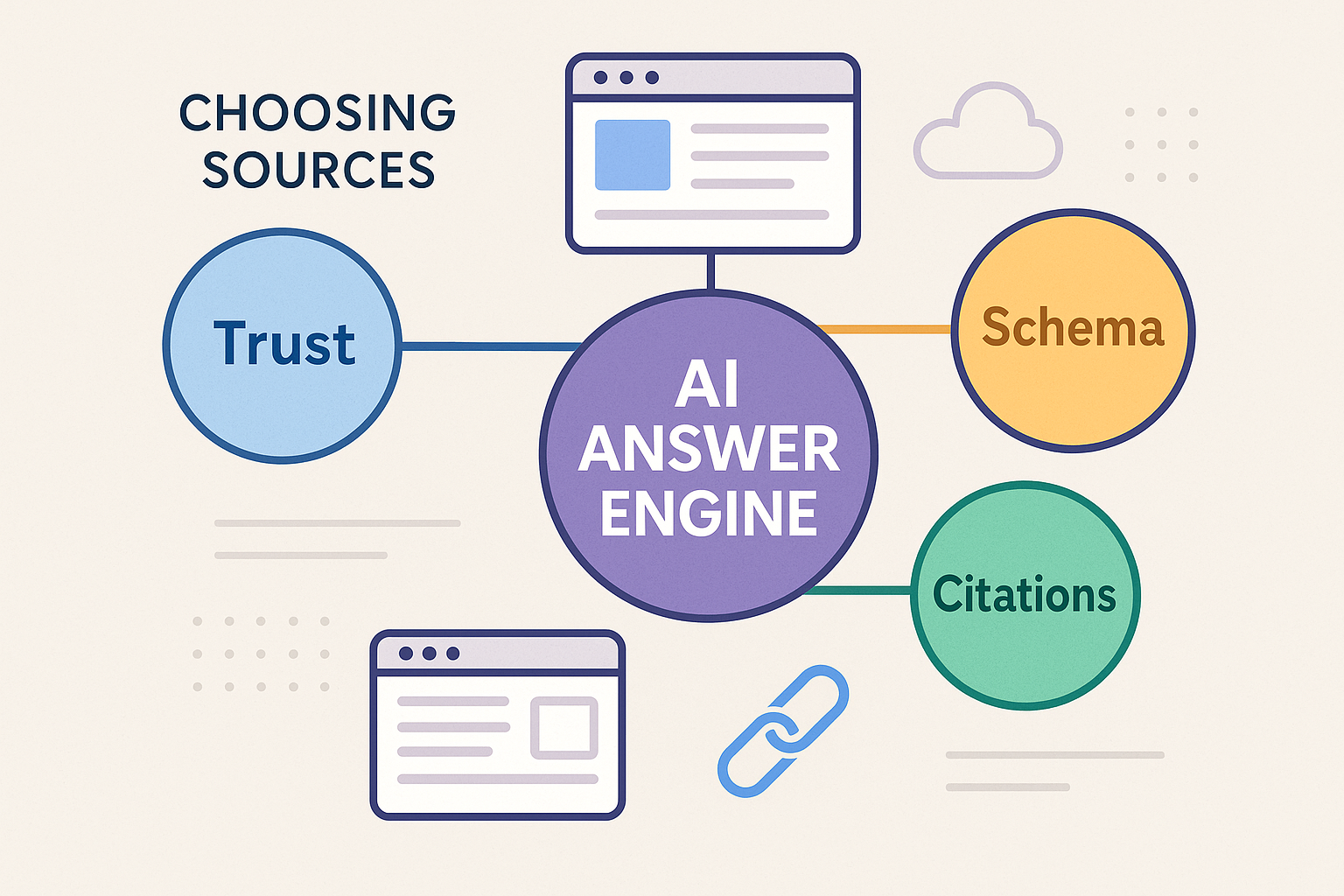
Add schema markup to help AI recognize your page structure:
- Article schema for your blog posts
- Visible FAQs that answer genuine reader questions; use structured data only where appropriate and currently supported.
- Validate your relevant markup and ensure it matches the page’s visible information.
- Breadcrumb schema for navigation clarity
Use your existing SEO plugin to manage appropriate markup. A paid plugin is not a requirement for appearing in Google’s AI features.
Step 6 — Focus on Conversational Keywords
Traditional keywords like “SEO tools 2026” still matter, but AI search runs on natural language.
Blend in phrases such as:
- “How do I optimize my site for AI search?”
- “Best ways to appear in AI Overviews.”
- “Tips to get featured by answer engines.”
Use conversational wording when it reflects the reader’s question. Keep examples and terminology natural rather than inserting phrases to satisfy a content score.
Step 7 — Track Performance Beyond Clicks
Success in GEO isn’t only about organic traffic. Measure new metrics like:
- Web search impressions and clicks in Search Console; the standard Web totals include AI feature traffic and do not isolate AI Overview performance.
- Brand or domain mentions inside Perplexity AI and You.com
- Citations of your articles in generative answers
Log any observed citations separately from website visits and conversions. A mention is a visibility observation, not proof of brand trust or a future sale.
Check Eligibility Before Reworking the Copy
For Google’s AI features, first confirm that the page is indexed and allowed to show a snippet. An HTTP 200 response is only one check: an accidental noindex directive, inaccessible content, or conflicting canonical can still interfere with eligibility. Review these in URL Inspection before spending time polishing the wording.
- Confirm the canonical points to the version you want in search.
- Make important explanations available as text and accessible on mobile.
- Add relevant links from related pages, not only a sitemap entry.
- Keep Article and Breadcrumb markup consistent with the visible page.
Worked Example: Improve One SEO Tutorial
Suppose an article answers “How do I check whether Google indexed my page?” but starts with a long history of search engines. Move the practical answer to the opening paragraph, then show the inspection steps and explain what each result means. Label any illustrative data as hypothetical and use a real screenshot only when you have one.
Next, link the tutorial to a deeper explanation of Google ranking systems and SEO priorities. Use the semantic SEO workflow to identify missing subtopics, such as why a crawled page may still be unindexed.
Record the page, edit date, and exact changes. After the page is recrawled, compare similar periods for impressions, clicks, and reader actions. Keep a separate log of any AI citation you observe. A change in either log is useful evidence, but one before-and-after comparison does not establish that the edit caused it.
Tools to Support GEO Optimization
- Existing SEO plugin — manage page titles, descriptions, and relevant schema without buying an upgrade for AI visibility.
- Search Console — inspect indexing status and review page and query performance.
- Analytics — review reader actions and useful visits alongside search performance.
- A dated query log — record manually observed answers, citations, region, and exact question; a few checks are not a complete visibility census.
Common Mistakes to Avoid
- Writing content solely for algorithms instead of readers.
- Using inaccurate markup or treating structured data as a guarantee of ranking or citations.
- Publishing thin or generic AI-written articles.
- Leaving outdated posts untouched for years.
Review generated drafts for accuracy, original value, and unsupported claims before publishing. Being human-written or AI-assisted does not by itself establish quality.
Key Takeaways
- GEO adds a visibility goal alongside conventional SEO, rather than replacing it.
- Structure your articles so both people and machines can understand them.
- Use E-E-A-T signals, schema, and clear explanations.
- Optimize for visibility within AI answers, not just rankings.
- Keep pages accessible, accurate, and useful. Search performance and AdSense approval cannot be guaranteed by an optimization checklist.
Frequently Asked Questions
What is Generative Engine Optimization (GEO)?
GEO is about structuring your content so AI models can easily interpret, summarize, and cite it in generated search results.
How is GEO different from traditional SEO?
SEO aims for ranking positions; GEO aims for visibility inside AI summaries and answer boxes.
Yes, small sites can be eligible. First check indexing and snippet eligibility, then improve the relevance and reliability of the answer. There is no guaranteed citation for any site.
What kind of content do AI models prefer?
Educational, structured, and concise content—especially lists, definitions, and actionable tips supported by credible data.
Yes. Link analysis remains part of Google’s ranking systems. Google has not published a rule that AI citations or structured data carry equal weight to backlinks.