Why Image SEO Matters More Than Ever
Images are no longer just decorative elements on a page.
They actively influence rankings, engagement, and visibility.
Search engines now evaluate:
- How images are named
- Whether alt text is meaningful
- How images affect user experience
- Whether images help explain the content
Poorly optimized images slow pages down, confuse crawlers, and reduce accessibility.
Well-optimized images do the opposite — they support rankings quietly but powerfully.
What Is Image SEO? (Simple Explanation)
Image SEO is the process of optimizing images so search engines can:
- Understand what the image represents
- Associate it with page content
- Display it correctly in image search
- Load it efficiently for users
This includes:
- File names
- Alt text
- Image size
- Format
- Placement
- Context
How Search Engines Understand Images Today
Search engines don’t “see” images the way humans do.
They rely on:
- Alt text
- Surrounding text
- File names
- Page context
- Structured data
If those signals are weak or missing, the image becomes invisible to search.
Common Image SEO Mistakes (Very Common)
- Uploading images named
IMG_4589.jpg - Skipping alt text or stuffing keywords
- Using oversized images
- Placing images randomly
- Using decorative images with no relevance
These mistakes are easy to fix — and fixing them often leads to quick SEO gains.
How to Name Images for SEO (Best Practice)
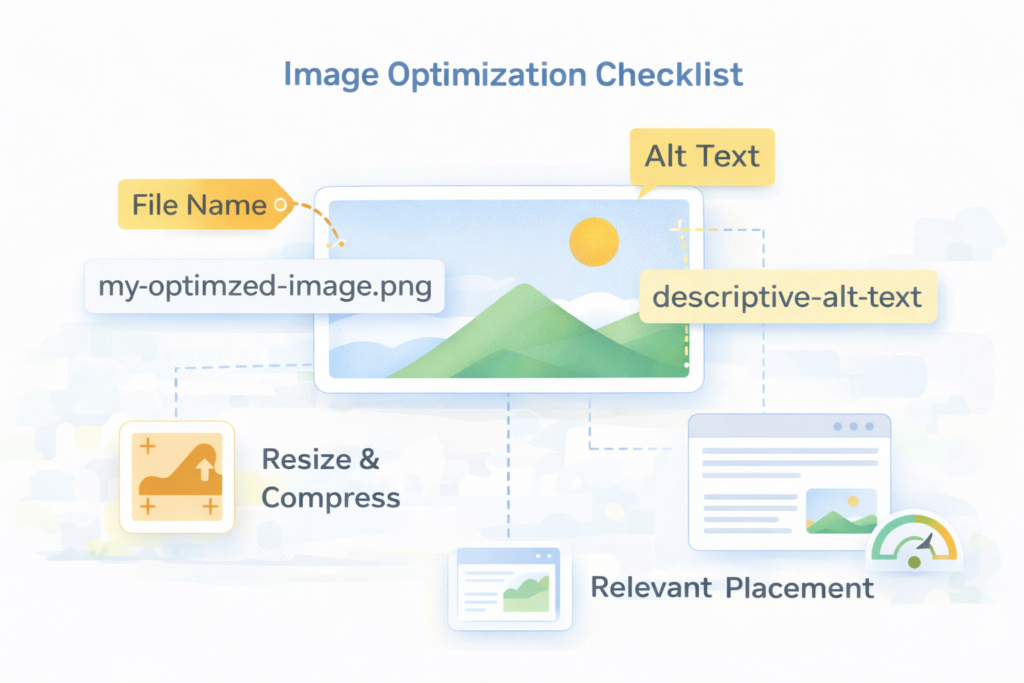
File names matter more than most people think.
❌ Bad File Name
IMG_2039.png
✅ Good File Name
image-seo-best-practices-example.png
Rules to follow:
- Use lowercase letters
- Separate words with hyphens
- Describe what’s actually in the image
- Avoid stuffing keywords
Writing Alt Text That Helps SEO (And Accessibility)
Alt text serves two purposes:
- Helps search engines understand the image
- Helps screen readers describe the image to users
Good alt text is:
- Descriptive
- Natural
- Contextual
- Short (usually under 125 characters)
❌ Bad Alt Text
“image seo image seo best practices image”
✅ Good Alt Text
“Example showing how image SEO best practices improve page visibility”
Image Size, Compression, and Performance
Large images can hurt performance — even if your site is technically fast.
Best practices:
- Resize images to display size
- Compress images before uploading
- Avoid uploading images straight from cameras
- Use modern formats when possible
Image optimization improves:
- Load time
- Engagement
- Crawl efficiency
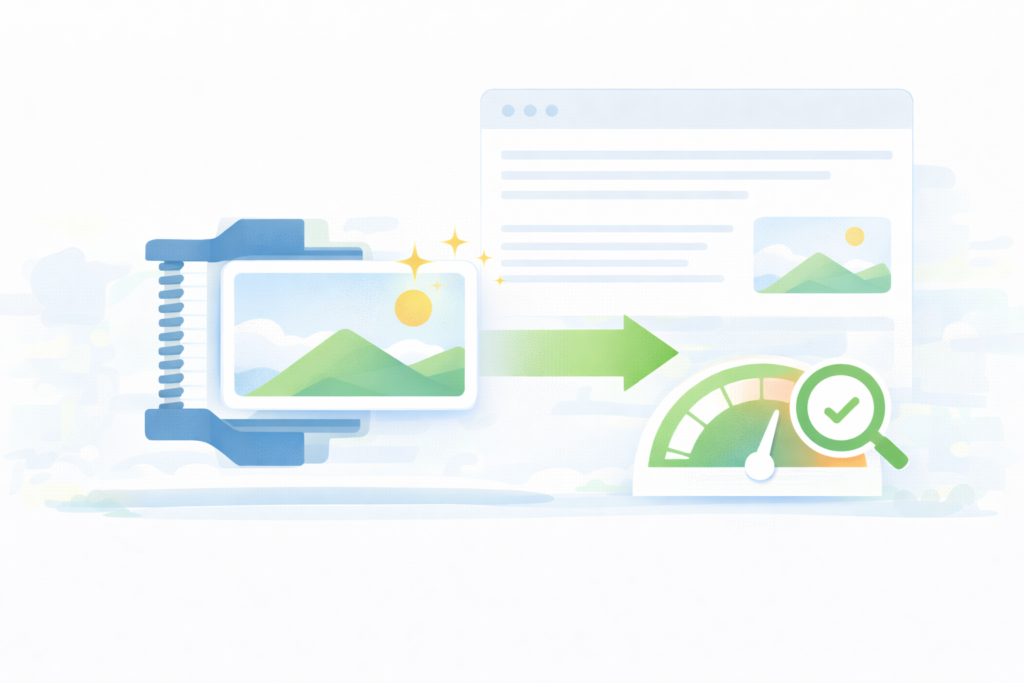
Image Placement and Context (Often Overlooked)
Where you place images matters.
Best placement:
- Near relevant headings
- After explaining a concept
- Where they support the text
Avoid:
- Random placement
- Decorative images with no connection
- Too many images back-to-back
Search engines use surrounding text to understand image meaning.
Image SEO and Internal Linking
Images can also support internal linking:
- Images inside linked content
- Image links with descriptive alt text
- Visual navigation aids
When done carefully, images reinforce topic relevance.
Image SEO for AI Search and Accessibility
AI systems rely heavily on:
- Alt text
- Context
- Structured information
Well-optimized images improve:
- AI summaries
- Accessibility compliance
- Trust signals
Accessibility improvements often align perfectly with SEO improvements.
Best Practices Summary (Quick Checklist)
- Use descriptive file names
- Write meaningful alt text
- Compress images properly
- Place images near relevant content
- Avoid keyword stuffing
- Keep images relevant
Key Takeaways
- Image SEO is a core on-page ranking factor
- Alt text and file names matter more than ever
- Optimized images improve UX and rankings
- Image SEO supports AI search visibility
- Small fixes can lead to fast gains
Frequently Asked Questions
Do images affect SEO rankings?
Yes. They impact engagement, accessibility, and relevance signals.
Is alt text mandatory?
Yes — for accessibility and SEO.
How many images should a page have?
Enough to support content, not overwhelm it.
Can image SEO help AI search?
Absolutely. AI relies on descriptive context.
Internal Linking Suggestions (On-Page Only)
- Link to Internal Linking Best Practices for SEO
- Link to SEO Meta Titles and Descriptions
- Link to Topic Clusters SEO