
A digital PR prospect list is a researched shortlist of publications, journalists, editors, newsletters, and resource pages that may genuinely serve the same audience as your campaign. The goal is not to collect the largest possible database. It is to identify relevant editorial destinations, record why each one fits, and decide where careful outreach is worth the effort.
Quick answer: Start with your asset’s audience and angle, find recent coverage and recurring editorial sections, capture page-level evidence and a public contact route, remove duplicates, then score every prospect for relevance, authority, editorial fit, and risk. The finished sheet should tell a reviewer who belongs on the list, why, and what to do next.
What Makes a Digital PR Prospect List Useful?
A useful prospect list supports an editorial decision. It is different from a purchased media database or a dump of domains. Each row connects a specific publication or contributor to a specific reader need and campaign angle. That evidence matters because a recognizable domain can still be a poor fit for your subject, format, or audience.
Google says links help it discover pages and understand relevance, but it also treats links created mainly to manipulate rankings as spam. A prospecting workflow should therefore seek earned editorial coverage, not guaranteed placements, excessive exchanges, or paid links disguised as independent recommendations. Review Google’s spam policies before approving a campaign.
This tutorial covers research and prioritization only. Build the campaign brief first with the digital PR campaign planning guide, and confirm the destination is ready with the linkable asset audit.
Prerequisites Before You Research Prospects
- A published or publication-ready asset with a stable URL
- One defined reader group and one primary editorial angle
- Two or three supporting facts that can be verified on the asset
- A spreadsheet with one row per publication or editorial contact
- A clear rule for approve, hold, and reject decisions
If the asset has no distinct value, prospect research will not repair it. Pause and improve the evidence, explanation, data, or utility before building a list.
How to Build a Digital PR Prospect List
1. Define the audience and angle in one sentence
Write a sentence such as: “This original checklist helps independent retailers reduce product-page accessibility errors.” Use it as a filter. A publication should reach that audience, cover that problem, or have a recurring section where the asset adds evidence. Reject broad sites that match only a keyword.
2. Find publications through relevant coverage
Search manually for recent articles about the problem, related statistics, competing resources, expert roundups, and recurring columns. Follow cited sources and author archives to find publications that repeatedly cover the subject. Do not automate scraping of Google Search results; Google’s spam policies prohibit machine-generated traffic and unauthorized automated access to Search.
Also inspect industry associations, specialist newsletters, podcasts with resource pages, and organizations serving the target audience. Record the exact article, section, or archive that proves relevance. A home page alone is weak evidence.
3. Capture evidence, not just names
For every candidate, save the publication URL, evidence URL, evidence date, topic covered, audience-fit note, author or editor name when publicly shown, and the public contact route. Describe the connection in plain language: “covers accessibility operations for small retailers” is more useful than “high authority.”
4. Verify editorial identity and contact routes
Open the evidence page and confirm the contributor still writes about the topic. Use a public author page, editorial directory, newsroom contact page, or submission policy. Do not infer private email addresses, collect sensitive personal data, or assume a social profile is an invitation to pitch.
5. Dedupe and classify each opportunity
Merge repeated domains, but preserve multiple relevant contacts only when they own different editorial beats. Tag the opportunity type, such as data citation, expert commentary, resource-page inclusion, newsletter mention, or correction of an unlinked brand reference. Existing brand references belong in the separate unlinked mention reclamation workflow.
6. Score relevance before authority
Use a simple 0-to-2 score for audience match, topical match, format fit, editorial evidence, and contact confidence. Add a risk flag for sponsored-only sections, obvious link selling, thin pages, unrelated guest-post networks, or promises of guaranteed dofollow links. A smaller specialist publication with clear reader fit can be more valuable than a famous site with no reason to cover the asset.
| Column | What to record | Decision value |
|---|---|---|
| Prospect | Publication and public URL | Identifies the destination |
| Evidence | Relevant page, date, and topic | Proves current editorial fit |
| Audience note | Who the publication serves | Connects the asset to readers |
| Contact route | Public author, editor, or policy page | Supports respectful outreach |
| Score and status | Fit score plus approve, hold, or reject | Creates an auditable queue |
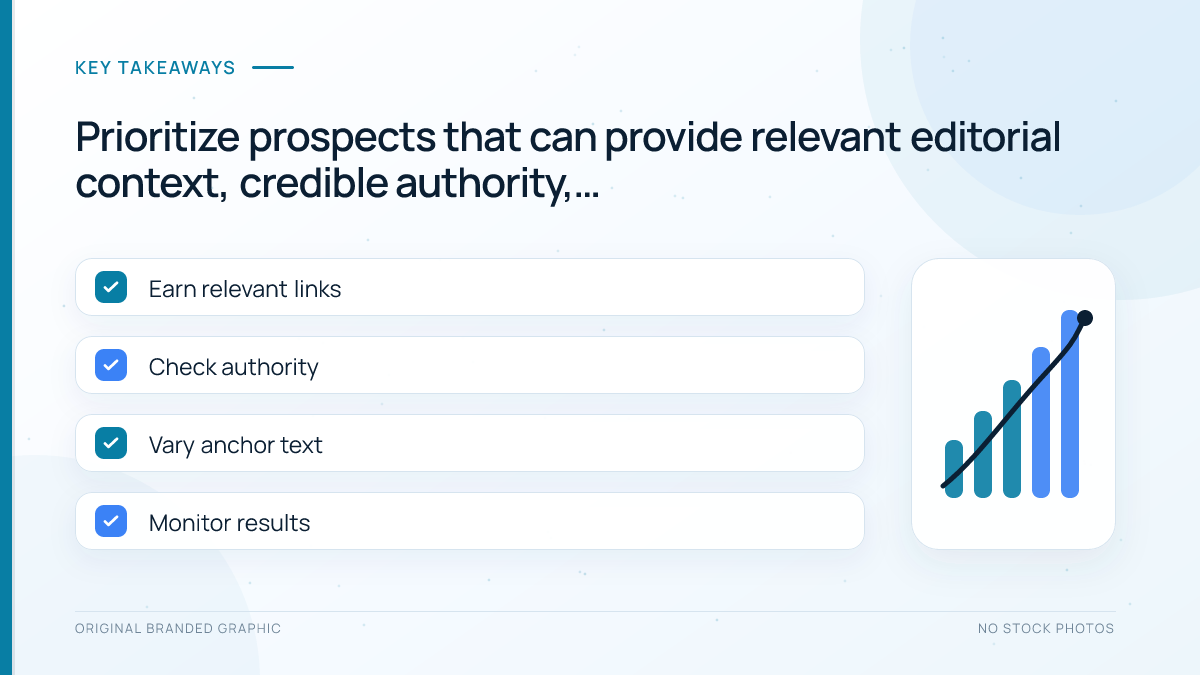
Before approval, apply the deeper checks in the link opportunity evaluation guide. Google recommends descriptive, relevant anchor text and warns against forcing keywords into links, so never make exact-match anchor text a condition of editorial coverage.
Illustrative Worked Example
Imagine an independent-retail accessibility checklist. The researcher finds 28 candidates, removes six duplicate domains, and rejects eight general business sites with no accessibility coverage. Seven publications have recent relevant articles and public editorial routes, while seven remain on hold because their evidence is old or the responsible editor is unclear.
The approved prospects receive notes such as “recently covered checkout accessibility; audience includes small ecommerce teams; checklist provides a practical follow-up.” This example is illustrative, not a campaign result. The important outcome is a list whose decisions can be reviewed before anyone sends outreach.
Troubleshooting a Weak Prospect List
- Too many irrelevant domains: narrow the audience and require a page-level evidence URL.
- Only large publications appear: add specialist associations, newsletters, and regional trade outlets.
- Contacts are outdated: verify the latest relevant byline and the publication’s current directory.
- Scores look identical: separate topic fit, audience fit, format fit, and contact confidence.
- The list is dominated by paid offers: reject placement sellers and revisit editorial sources.
Limits of Prospect Research
A strong list does not guarantee coverage, links, rankings, citations in AI answers, or referral traffic. It improves targeting and review quality. Search and AI systems decide what to surface, and publications make independent editorial choices. Measure accepted coverage and business outcomes with the digital PR measurement workflow, while remembering that correlation is not proof of causation.
Frequently Asked Questions
How many prospects should a digital PR list contain?
There is no universal target. Keep only prospects with evidence of audience, topic, or format fit. A small reviewed list is usually more actionable than a large unverified database.
Should I buy a media contact list?
A purchased list may be outdated or poorly matched to your campaign. Build your core list from current public editorial evidence and verify every contact route before outreach.
Can I use domain authority to choose prospects?
Use third-party authority metrics only as supporting context. They do not replace audience relevance, editorial quality, current coverage evidence, or a manual risk review.
Should every prospect be asked for a backlink?
No. Offer a useful source or asset and let the publication make the editorial decision. Demanding links or exact anchor text can undermine the relationship and create spam risk.
How often should I refresh the prospect list?
Verify evidence and contact routes before each campaign. Refresh older rows when contributors change roles, publications close sections, or the campaign angle changes.
Conclusion
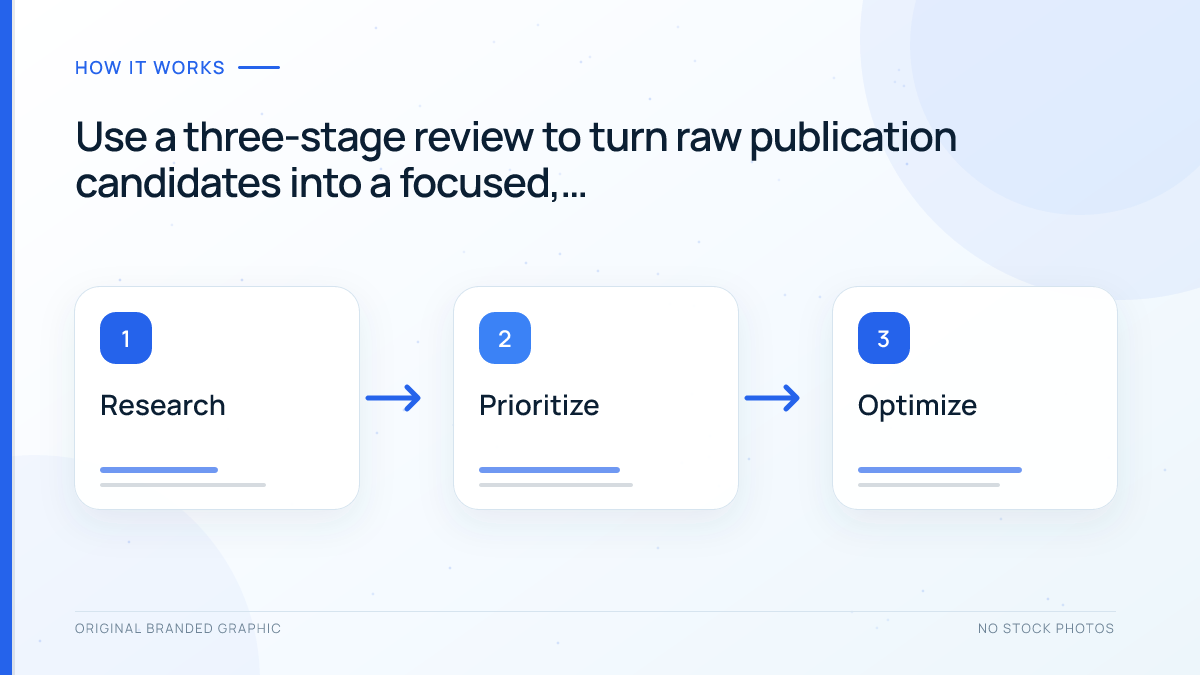
A digital PR prospect list should make relevance visible. Define one audience and angle, collect current page-level evidence, use public contact routes, remove duplicates, and prioritize fit before authority. That process turns scattered names into a focused, reviewable research asset and gives later outreach a credible foundation.