
Digital PR measurement for AI search requires separate evidence for coverage, backlinks, referred visits, identifiable AI-assistant visits, Google generative-AI visibility, and business outcomes. A mention is not automatically a link or visit, and none proves an AI citation. This workflow prevents inflated reporting.
What You Need Before You Start
Before outreach, record the campaign name, start date, audience, target pages, and desired action. Confirm those pages are published, crawlable, indexable, and useful without a login. Google says a page must be indexed and eligible for a search snippet to qualify for its generative-AI features, but eligibility does not guarantee inclusion.
You also need GA4, Google Search Console, and a spreadsheet. Mark meaningful actions as GA4 key events. Record a 28-day baseline when possible; small sites may need a longer window.
Build a Digital PR Measurement Sheet
Use one row per published placement, not one row per pitch. Add these columns:
- Publication, article URL, publication date, and campaign name
- Brand mentioned, target page mentioned, and link present
- Destination URL, anchor text, link attribute, and placement context
- Referral sessions, engaged sessions, key events, and revenue if applicable
- Search impressions and clicks for the target page
- Google generative-AI impressions for the target page
- Notes, evidence URL, check date, and next review date
Keep blanks as unknown rather than converting them to zero. For example, a missing referral may result from an app, redirect, privacy control, or copied URL. It does not prove that nobody visited.
Separate the Metrics Before You Compare Them
| Signal | What it proves | Where to verify |
|---|---|---|
| Published mention | The publication named the brand, person, data, or resource | Live coverage page |
| Backlink | The coverage links to a specific URL | Live HTML and Search Console links data |
| Referral visit | A measured session arrived through a referring source | GA4 traffic acquisition |
| AI Assistant visit | GA4 recognized an AI-assistant referrer or the exact medium | GA4 default channel group and source |
| Google generative-AI impression | A site URL appeared in a Google generative-AI feature | Search Console Generative AI report |
| Business outcome | The visitor completed a defined valuable action | GA4 key events or commerce data |
GA4 currently assigns the AI Assistant channel when the medium exactly matches ai-assistant. It can also set that medium and the campaign value when the referrer matches Google’s recognized assistant list. Treat only those identifiable visits as AI Assistant traffic. Do not relabel unexplained Direct traffic or Google Organic Search visits as AI referrals.
Use a Discover, Connect, Measure Workflow
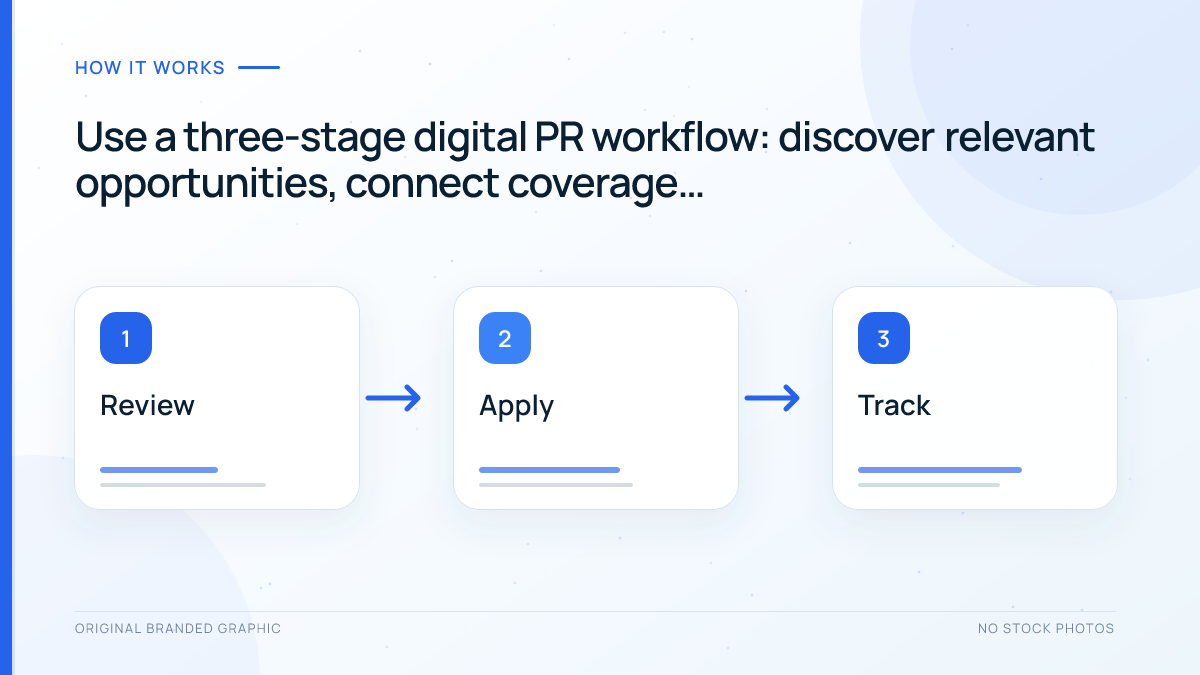
1. Discover relevant opportunities
Choose publications whose readers match the campaign audience and whose coverage can add context. Record why each outlet is relevant. A specialist publication can be more useful than a broad site when it reaches the right people.
2. Connect each placement to a useful page
Map every pitch to the page that supports the story. Research coverage should link to the methodology or data, not an unrelated homepage. Leave editorial control with the publisher. For evaluation, use this complete link-building guide and review what backlinks do and do not show.
3. Measure each evidence layer
Check the live placement first, then record the linked destination and attributes. In GA4, filter by campaign date and inspect source, medium, landing page, engagement, and key events. In Search Console, compare the target page before and after publication using similar complete date ranges. Open the Generative AI performance report separately for impressions, pages, countries, devices, and dates. Google made those dedicated insights available worldwide on August 31, 2026; they measure Google generative-AI visibility, not every assistant or citation on the web.
Apply a Quality-Control Checklist
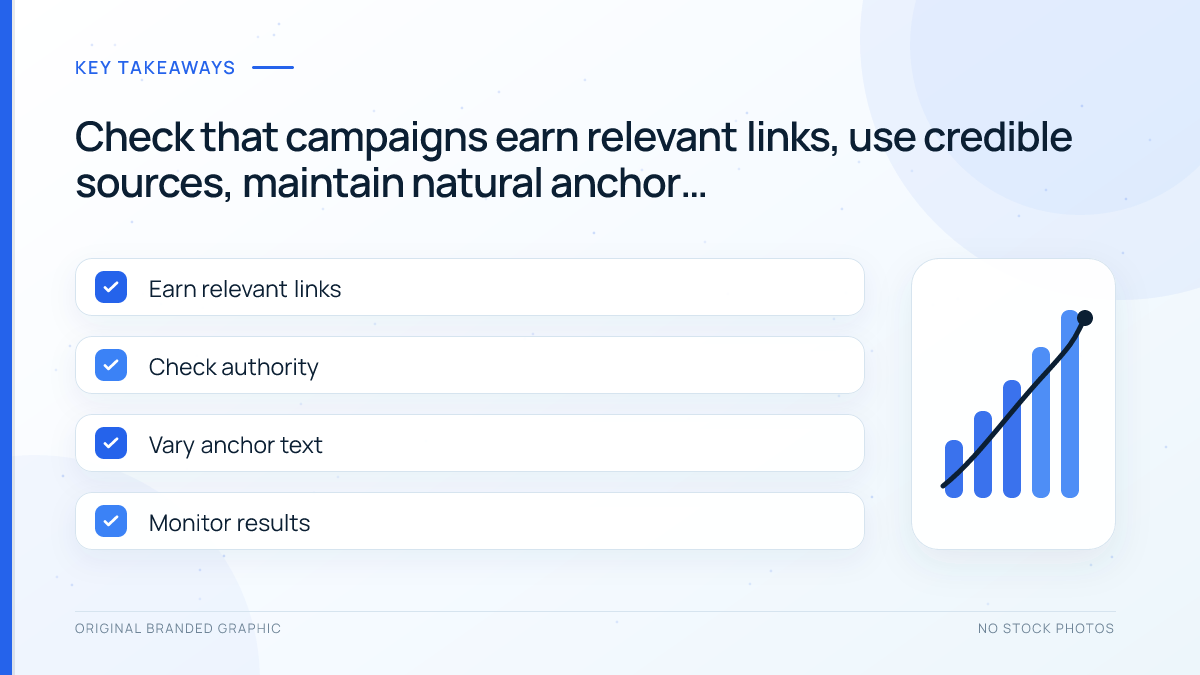
Confirm that coverage is relevant, the publication is credible for the topic, the destination supports the claim, and anchor text reads naturally. Google defines links created mainly to manipulate rankings as link spam. Qualify paid placements appropriately, and never present editorial mentions as guaranteed ranking signals.
Audit the supporting claims as carefully as the link. The source-audit process for AI search content helps verify provenance, dates, and primary evidence. When the campaign uses original research, document collection limits and methodology with the first-party data workflow.
Worked Example: Report Without Overclaiming
Consider an illustrative campaign for an original survey. Two publications mention it; one links and one does not. GA4 records eight referral sessions, five engaged sessions, and one signup. Search Console shows ordinary impressions rose while its Generative AI report records three impressions.
The accurate report is two placements, one backlink, eight referral sessions, one key event, and three Google generative-AI impressions. It should not claim the backlink caused the increase, the unlinked mention caused an AI citation, or the campaign generated Direct visits.
Troubleshoot Missing or Conflicting Data
- Coverage exists but no referral appears: verify the link and destination, then check GA4 source, medium, landing page, and date. Record the result as unobserved, not zero impact.
- A mention has no link: log it as coverage only. Do not count it as a backlink or referral.
- The same placement uses several URLs: group them under one placement but measure each destination separately.
- Search visibility changes: compare complete periods and note concurrent publishing, seasonality, updates, and broader ranking changes.
- An assistant cites the page in a manual check: save the exact prompt, date, platform, location, response, and cited URL. A small sample is evidence for that test only.
Limitations of Digital PR Attribution
Browsers, apps, redirects, privacy choices, and cross-device behavior can hide a referrer. Search Console reports Google visibility, while GA4 reports measured site activity; neither records every mention or AI citation. Keep Google’s Generative AI report separate from GA4 AI Assistant visits.
No special schema or AI text file guarantees Google AI inclusion. Google’s guidance emphasizes useful original content, crawl and index eligibility, clear technical structure, and authentic mentions. Judge campaigns by qualified coverage, useful traffic, and outcomes rather than one vanity metric.
Frequently Asked Questions
What is the best KPI for digital PR in AI search?
There is no single best KPI. Choose a primary business outcome such as qualified signups, enquiries, or sales, then report supporting evidence separately: placements, backlinks, referral engagement, Google generative-AI impressions, and identifiable AI Assistant visits. Keeping the layers separate makes the result auditable and prevents a visibility signal from being presented as revenue or a citation.
Does an unlinked brand mention help AI visibility?
An unlinked mention confirms that a publisher discussed the brand, but it does not prove an AI system used or cited that mention. Record it as earned coverage and assess its relevance and accuracy. Do not convert it into an estimated backlink, visit, citation, or ranking gain without direct evidence.
Can GA4 show all traffic from ChatGPT and other assistants?
No. GA4 can identify visits when a recognized referrer or the exact ai-assistant medium is available, but apps, privacy controls, copied links, and redirects may remove referral information. Report the identifiable AI Assistant channel as a measured subset and do not assign unexplained Direct or Organic Search traffic to assistants.
Are Google generative-AI impressions the same as AI citations?
No. The Search Console report shows how often site URLs appeared in Google’s generative-AI features and provides dimensions such as pages, countries, devices, and dates. It does not measure every assistant, every brand mention, or every citation across the web. Keep it as a Google-specific visibility metric.
How long should a digital PR campaign be measured?
Record placements and referrals immediately, then compare complete 28-day periods for early direction. Continue reviewing at 60 and 90 days when the site has low traffic or the topic has a long research cycle. Use identical date lengths, annotate other site changes, and avoid attributing every fluctuation to one placement.
Should paid placements be included in digital PR results?
They may be reported, but label them separately from earned editorial coverage. Confirm that paid or sponsored links are properly qualified and do not claim ranking value. Mixing paid and earned placements hides cost and editorial independence, making campaign comparisons less useful.
Conclusion
A reliable digital PR report follows the evidence from discovery to connection to measurement. Count what you can verify, preserve unknowns, and separate Google generative-AI visibility from identifiable assistant referrals. That discipline produces a smaller but more trustworthy set of numbers—and a clearer view of which publications, pages, and stories deserve the next investment.