
A linkable asset audit determines whether a resource is genuinely useful, defensible, accessible, and ready for editorial outreach. It should happen after the asset is drafted but before a prospect list is contacted. The audit does not predict backlinks. It finds weaknesses that would make an editor ignore, misunderstand, or distrust the resource.
Quick answer: Review the reader problem, evidence, originality, usability, destination page, and link expectations. Repair any claim that lacks a source, any tool that cannot be used, and any outreach plan that depends on guaranteed links. A strong asset gives publishers something worth referencing while leaving every editorial decision under their control.
What Counts as a Linkable Asset?
A linkable asset is a public resource that another site may reasonably reference because it helps its audience. Examples include an original dataset, calculator, template, methodology, visual explainer, benchmark, or unusually clear guide. The format alone does not make it linkable. A downloadable checklist hidden behind a form may be less useful than a complete public page with transparent evidence.
The asset also needs a purpose beyond earning links. Google’s people-first content guidance asks why content was created and whether it helps visitors directly. Its generative AI guidance similarly emphasizes unique, useful, non-commodity content and warns against seeking inauthentic mentions.
Prerequisites for a Linkable Asset Audit
Gather the final draft, source files, methodology, named owner, intended audience, destination URL, and the exact action a visitor should be able to complete. If the asset uses internal data, confirm permission to publish it and remove private or identifying information. For research assets, record the sample, timeframe, definitions, exclusions, and limitations.
Assign a reviewer who did not create the first draft. Give that person access to the page on desktop and mobile, every download, calculation, citation, and form. If first-party evidence is central, follow the site’s first-party data publishing workflow before treating the numbers as outreach-ready.
How to Run a Linkable Asset Audit
1. Restate the reader problem
Write one sentence describing who the asset helps, what decision it supports, and what the reader can do afterward. Remove sections that exist only to make the page longer. If the useful outcome cannot be stated clearly, the asset is probably a broad content idea rather than a finished resource.
2. Verify every material claim
Trace statistics, comparisons, quotations, and recommendations to a primary source or a documented internal method. Check that citations actually support the sentence beside them and that dates, units, and definitions are consistent. Use the source-audit process for AI search content to separate evidence, interpretation, and unsupported inference.
3. Identify the original contribution
Highlight what a publisher cannot obtain from a quick search: a new dataset, tested method, reusable template, expert explanation, or clearer synthesis. Do not claim originality merely because wording is different. If the page restates common advice, add a genuine contribution or stop outreach until one exists.
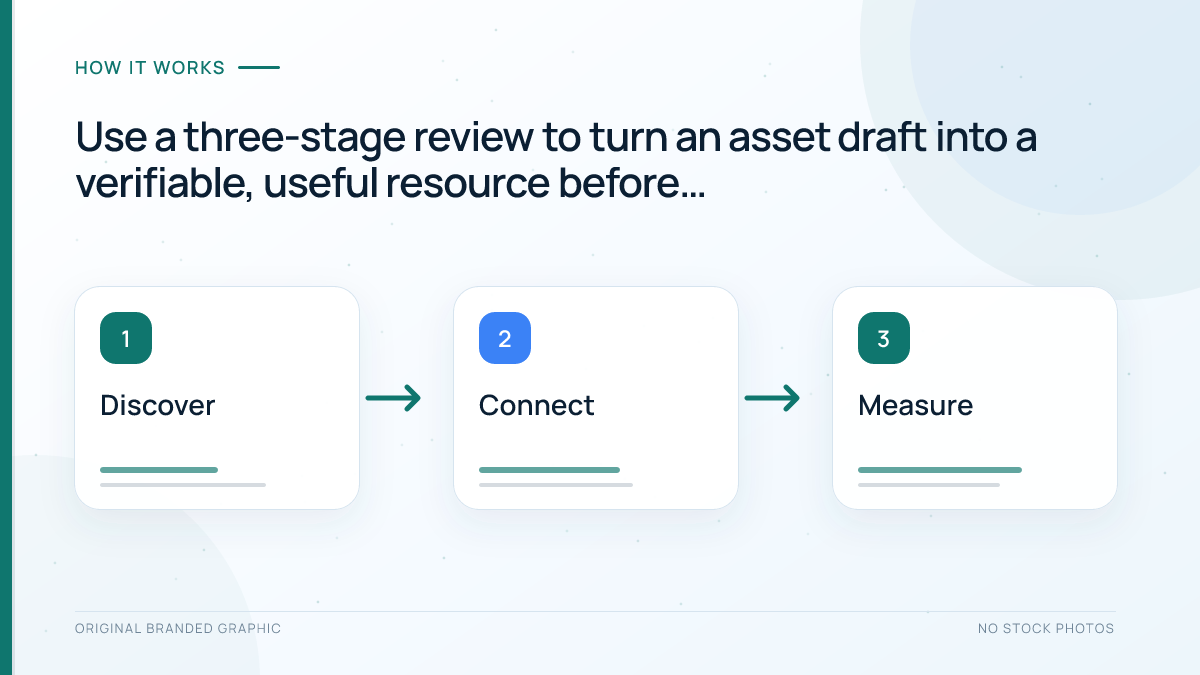
4. Test the resource as a visitor
Open the public URL in a private browser window. Test navigation, downloads, filters, formulas, mobile layout, keyboard access, image alternatives, and any result the asset promises. The useful information should not disappear behind a compulsory signup. Record failures with the exact device, browser, step, and expected result.
5. Inspect the destination page
The page should load, use a self-consistent canonical URL, remain eligible for indexing, and explain the asset without requiring the pitch email for context. Give important evidence a stable location that can be referenced directly. Relevant internal links should lead readers to supporting methodology or definitions, not simply to commercial pages.
6. Review link and outreach expectations
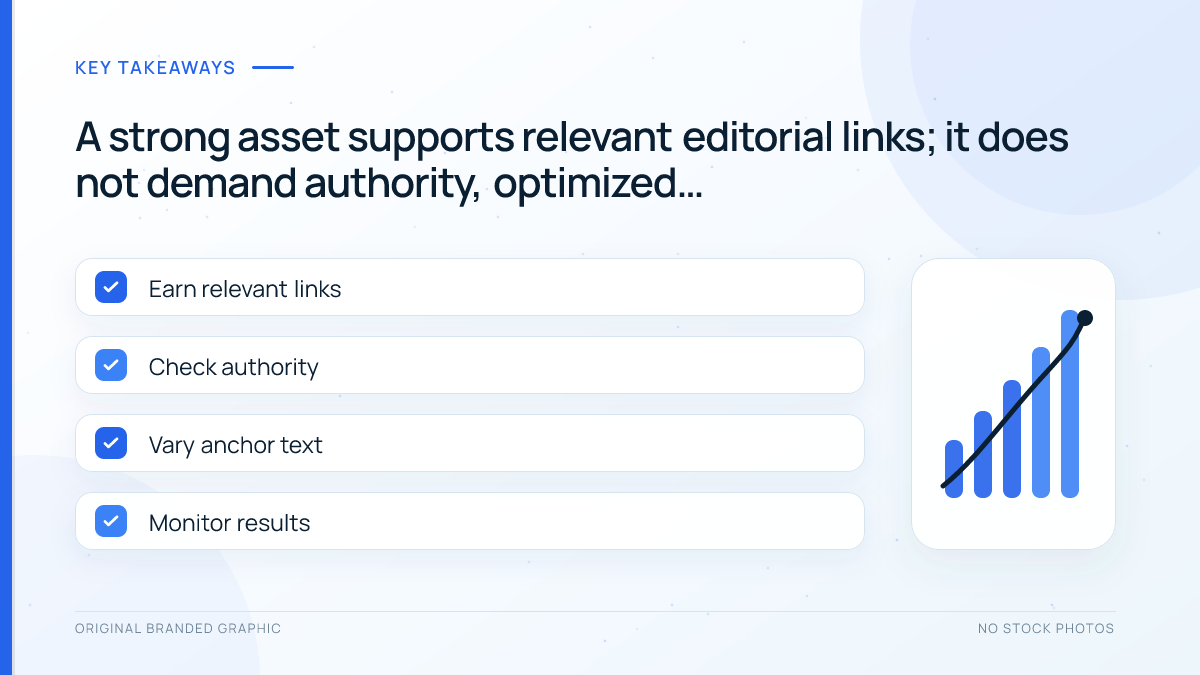
A publisher may mention the asset without linking, choose another destination, or decline the pitch. Google’s spam policies prohibit links created mainly to manipulate rankings, including paid links that pass ranking credit and required keyword-rich links. Do not make a followed link, exact anchor, or reciprocal placement a condition of participation.
If the asset passes, place it inside a focused digital PR campaign plan built around audience fit and verifiable evidence. The audit approves the resource; it does not approve every outlet or pitch.
Linkable Asset Readiness Scorecard
| Area | Pass evidence | Hold condition |
|---|---|---|
| Reader value | Specific audience, decision, and usable outcome | Only a promotional message |
| Evidence | Sources, method, definitions, and limits recorded | Unverifiable claim or invented result |
| Originality | New data, tool, template, method, or synthesis | Commodity summary with no added value |
| Usability | Public, functional, readable, and accessible | Broken, private, or misleading experience |
| Outreach | Relevant audience and optional editorial link | Guaranteed link or forced anchor |
Use pass, repair, or hold for each row. Do not turn the scorecard into a cosmetic percentage. One serious failure, such as fabricated data or a broken calculator, is enough to hold outreach even when every other row passes.
Illustrative Worked Example
Imagine a small ecommerce platform has drafted a calculator that estimates the cost of checkout errors. This is an illustrative audit, not a reported test or campaign result.
- Reader value: Store operators can estimate which error deserves attention first.
- Evidence: Each input has a definition, source, date, and stated limitation.
- Originality: The calculator applies a documented method rather than copying a generic formula.
- Usability: A reviewer tests the calculation on mobile, keyboard navigation, and extreme inputs.
- Destination: The public page explains the method and provides a worked example without requiring an email address.
- Outreach: Relevant ecommerce publications receive a concise explanation and retain control over whether and how they reference it.
The asset is held if the team cannot justify the default assumptions. A polished design cannot repair an unsupported model. The correct fix is to document or replace those inputs, repeat the usability test, and then rerun the full audit.
Troubleshooting Common Audit Failures
| Failure | Likely cause | Repair |
|---|---|---|
| The asset feels generic | No original contribution | Add a documented method, expert input, usable tool, or new evidence. |
| Reviewers dispute a claim | The citation is weak or indirect | Use a primary source, narrow the wording, or remove the claim. |
| The page earns mentions but no visits | The destination adds little practical value | Make the full resource usable and clarify what a visitor gains. |
| Only sponsored offers respond | Prospecting or positioning is poorly matched | Return to audience fit and reject guaranteed-link packages. |
Limitations of the Audit
Passing the audit does not guarantee coverage, backlinks, rankings, traffic, or inclusion in an AI-generated answer. Editors make independent decisions, analytics can miss referrals, and search performance has many causes. Google states that normal SEO foundations still apply to its generative features; there is no special schema or outreach tactic that guarantees selection.
Measure published mentions, verified links, referral activity, identifiable assistant traffic, search visibility, and business outcomes as separate signals. Review the site’s Digital PR measurement workflow rather than treating one backlink as proof of broad impact.
Frequently Asked Questions
What is the purpose of a linkable asset audit?
Its purpose is to find evidence, originality, usability, destination, and outreach problems before a resource is pitched. It reduces avoidable weaknesses but does not predict whether a publisher will cover or link to the asset.
Does a linkable asset need original data?
No. Original data can be valuable, but a transparent calculator, practical template, documented method, expert explanation, or unusually useful synthesis can also give publishers and readers a legitimate reason to reference the page.
Should the asset be placed behind an email form?
Usually the main evidence and promised utility should be publicly usable. A compulsory form can make verification and referencing harder. An optional download may complement the public page when it provides additional convenience rather than hiding the core value.
Can I ask publishers to use a specific anchor text?
You may identify the correct destination and explain its relevance, but the publisher should control wording and placement. Do not require keyword-rich anchor text, a followed link, or reciprocal coverage as a condition of participation.
Does passing the audit guarantee AI search visibility?
No. A useful and crawlable asset may support discovery, but no audit, link, schema type, or outreach tactic guarantees an AI mention or citation. Measure only the visibility and visits that available tools can actually identify.
Conclusion
A linkable asset audit protects outreach from preventable mistakes. Confirm the reader outcome, verify every material claim, identify a real contribution, test the public experience, inspect the destination, and remove manipulative link expectations. Pitch only after every hold condition is repaired, then measure coverage, links, visits, and outcomes without promising what the asset cannot control.