
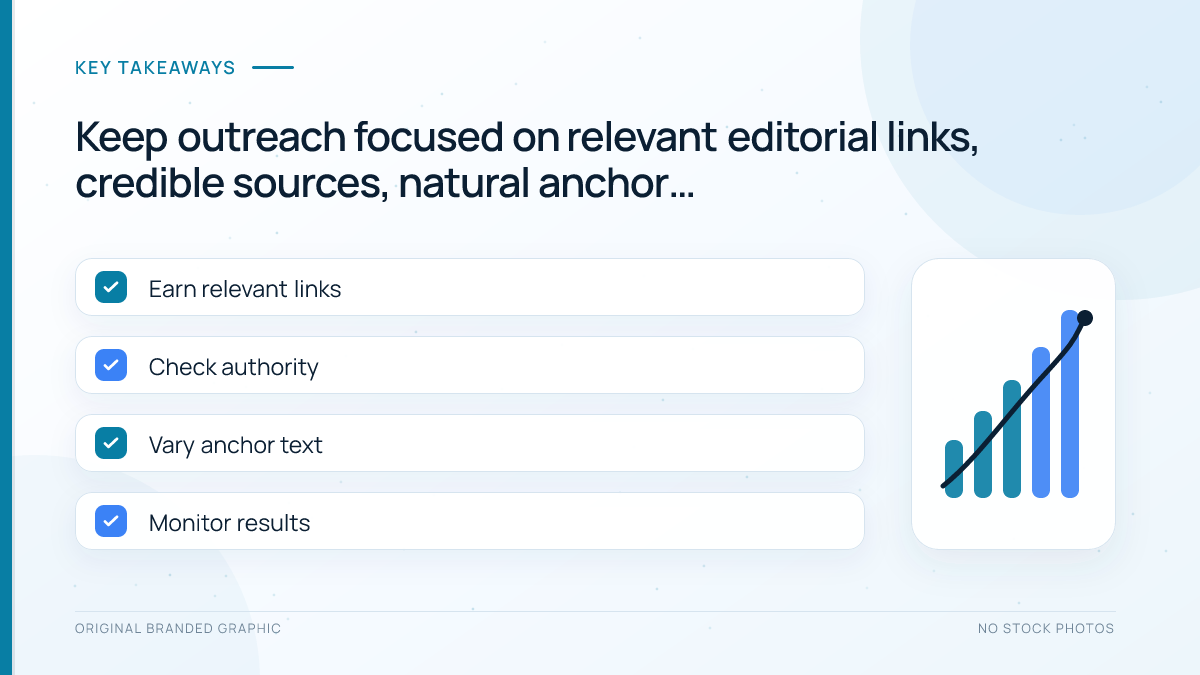
A digital PR pitch should give a relevant editor a clear reason to consider your source, asset, or expert contribution. It should not demand a backlink, promise an exchange, disguise payment, or send the same message to an unrelated list. The safest approach is to lead with reader value, show why the idea fits the publication, and leave every editorial decision with the recipient.
Quick answer: Write a digital PR pitch by connecting one verified campaign angle to one publication’s recent coverage. Use a specific subject line, a short opening that proves relevance, two or three useful facts, a direct asset URL, and a low-pressure close. Review every pitch for accuracy, privacy, link-spam risk, and contact fit before sending.
What a Digital PR Pitch Is and Is Not
A digital PR pitch is a concise editorial proposal. It may offer original data, expert commentary, a practical resource, a local angle, or a timely explanation. Its job is to help a journalist or editor decide whether the material serves their audience.
It is not a link order. Google classifies buying or selling links for ranking purposes, automated link creation, excessive exchanges, and required unqualified links as link spam. Paid placements can be legitimate advertising, but Google says they should use an appropriate link qualification such as sponsored or nofollow. Review the current Google spam policies before approving outreach.
Start only after you have a defined angle from the digital PR campaign planning workflow and a publication-ready destination confirmed through the linkable asset audit.
Prerequisites Before You Write
- A verified source, asset, or expert who can support every claim
- A focused campaign angle and the reader problem it solves
- A reviewed prospect row with current page-level evidence
- A public editorial contact route or submission policy
- A sender identity that truthfully represents the organization
Do not pitch an unfinished page, a claim you cannot document, or an expert who has not approved the quoted position. Use the digital PR prospect-list tutorial to verify audience and contact fit first.
How to Write a Digital PR Pitch
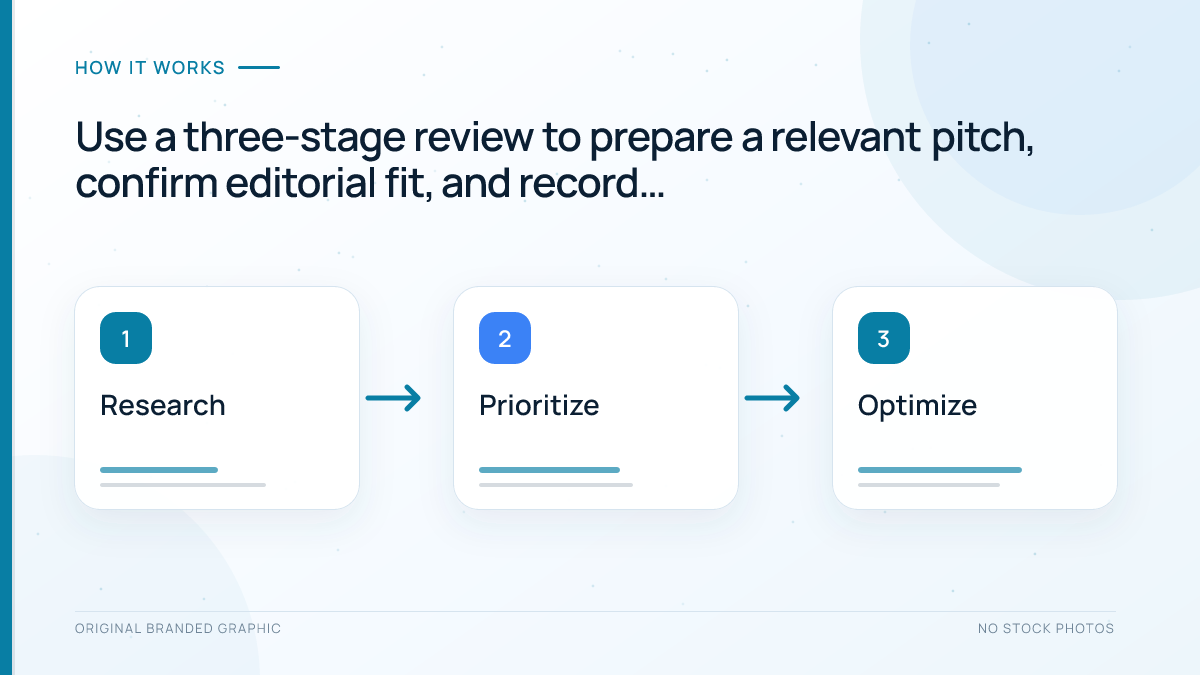
1. Choose one reason this recipient should care
Open the evidence URL saved for the prospect. Identify the audience, topic, and format the publication already covers. Then write one sentence connecting your contribution to that need. “Your recent guide explains the problem; our checklist gives small retailers a practical audit” is useful. “Your site has high authority” is not.
2. Write a specific subject line
Describe the useful idea rather than the desired link. A clear subject might be “New accessibility checklist for small retail teams.” Avoid fake reply prefixes, manufactured urgency, vague praise, excessive capitalization, or claims such as guaranteed exclusive when the material is not exclusive.
3. Build a short evidence-led message
Use four compact parts: relevance, value, evidence, and access. Mention the relevant coverage naturally, explain what is new, provide the strongest verified detail, and link directly to the supporting page. Attach files only when the publication requests them. Do not hide tracking URLs behind misleading text.
4. Make the editorial choice explicit
Offer the material for consideration and let the recipient decide whether to cover, quote, cite, or link. Never require exact-match anchor text or a dofollow link. Google advises that anchor text should be descriptive, concise, and natural; forcing keywords can reduce clarity and create risk.
5. Review personalization and accuracy
Confirm the person still covers the topic, the referenced article belongs to them, every name is spelled correctly, the asset URL works, and each statistic matches its source. Remove empty personalization such as compliments that could apply to any publication. A useful pitch can be templated for structure, but the relevance sentence must be prospect-specific.
6. Send once and follow up carefully
Respect the publication’s stated preferences. If no policy is available, send one message and at most one concise follow-up after a reasonable interval. Stop after a decline, opt-out, or no response to the follow-up. Record the date and status so another teammate does not contact the same person repeatedly.
| Pitch element | Include | Avoid |
|---|---|---|
| Subject | Specific reader value | Fake urgency or link requests |
| Opening | Current coverage evidence | Generic praise |
| Body | Verified fact and clear contribution | Unsupported superlatives |
| Link | Direct relevant destination | Hidden or misleading redirects |
| Close | Low-pressure editorial choice | Guaranteed placement language |
Apply the deeper relevance and risk checks in the link opportunity evaluation guide before any send. If money, products, travel, or another benefit is involved, disclose it clearly and ask the publisher to qualify the resulting link according to Google’s outbound-link guidance.
Illustrative Pitch Example
Subject: Accessibility checklist for independent retail teams
Hello Maya, your recent article on checkout usability explains why small retailers miss accessibility barriers. We created a step-by-step checklist covering product-page labels, keyboard checks, and error messages, with each recommendation tied to a public standard. If it helps your readers, the checklist is available here. I can also provide a short comment from the accessibility specialist who reviewed it. No response is needed if it is not a fit.
This is illustrative, not a real pitch or result. It demonstrates relevance, a concrete contribution, a direct destination, an optional expert, and an easy decline. It does not request an anchor, promise reciprocity, or claim guaranteed coverage.
Troubleshooting Common Pitch Problems
- Low reply rate: recheck audience fit, subject clarity, and whether the contribution is genuinely new.
- Editors ask what is newsworthy: state the new evidence, change, comparison, or practical use earlier.
- Messages look automated: remove generic compliments and write the evidence sentence from the prospect row.
- Several teammates contact one editor: use one shared owner and a send-status column.
- A placement requires payment: treat it as advertising, disclose the relationship, and require proper link qualification.
Limits and Measurement
A compliant, relevant pitch cannot guarantee a reply, article, backlink, ranking improvement, referral visit, or citation in an AI answer. Google’s current generative-AI guidance says established SEO practices still apply and cautions against seeking inauthentic mentions. Evaluate accepted coverage and downstream outcomes with the digital PR measurement workflow, not by counting emails alone.
Frequently Asked Questions
How long should a digital PR pitch be?
Keep it as short as the idea allows. Most pitches need only a relevant opening, the useful contribution, one or two verified details, a direct link, and a simple close.
Should I ask for a backlink in the pitch?
No. Offer useful material and let the publication decide whether and how to cite it. Demanding a link or specific anchor text can create editorial friction and spam risk.
Can I use the same pitch template for every prospect?
You can reuse a basic structure, but the evidence, audience connection, and value statement should be specific to each publication and recipient.
How many follow-ups should I send?
Follow the publication’s policy. When no rule is available, one concise follow-up is a cautious default, followed by a clear stop if there is no response.
What if a publisher asks for payment?
Treat the opportunity as advertising rather than earned coverage. Disclose the commercial relationship and ensure any resulting link uses an appropriate sponsored or nofollow qualification.
Conclusion
A digital PR pitch works when it respects the recipient’s audience and editorial independence. Connect one verified contribution to current coverage, keep the message concise, provide accurate evidence, avoid link demands, and stop after a reasonable follow-up. That creates a repeatable outreach process without turning public relations into link spam.